

New shades and shade pairs from the color wheel
These instructions are intended for you who are interested in mixing your own unique shades.
Read here how to mix your own shades from paint and how you can use the Color Wheel as your aid. At the end of the instructions, see a few useful videos on the topic.
About using the color wheel
The color wheel disc has 12 segments – parts, each representing one color.
The disc shows how colors relate to each other, whether they are adjacent or diametrically opposite.

The double-sided color wheel contains three primary colors, red, yellow, and blue, as well as three secondary colors, green, orange, and violet (when two primary colors are mixed together, they form a secondary color).
The color wheel also includes six tertiary colors, which are mixtures of primary and secondary colors. These are red-orange, yellow-orange, yellow-green, blue-green, blue-violet, and red-violet.
Warm colors – reds, yellows, and pinks – are on one side. Cooler shades – blues, greens, and violets – are on the opposite side of the wheel.
Choose a color, for example green – then turn the inner wheel of the color wheel to see what it looks like when you add red to your chosen green. Turn more and you will see what green looks like when you add yellow, and so on.
The color wheel is double-sided
Turn the color wheel and examine the green color.
Set the inner disc of the wheel aligned with green, and you will see three shades of green in the inner disc view:
Marked as Shade, Tone, and Tint.
Shade: your chosen color + white
Tone: your chosen color + gray
Shade: your chosen color + black

Our Frenchic customers have skillfully mixed their own unique shades, which you can find in the FB group by searching for COLOR RECIPE. Join the group here!
How to create effective color combinations for home decor using the color wheel?
Using the color wheel to build a color scheme also requires understanding different types of color schemes from the perspective of home decor ideas. Examine the shades with the color wheel, together with color theory, without forgetting your own preferences.
The color wheel is just your helper, but trust your own opinion and use the shades you like yourself.
However, the color wheel can be very practical, whether you are planning large projects or considering creating a single beautiful shade mix.
Mixing colors is fun, and by mixing your own shades, you can find completely unique and personal colors to use!
A diligent shade mixer and painter always keeps white and black paint on the shelf because with them you can mix countless shade combinations that still look beautiful together – a great tip for renovation and interior painters!
Monochromatic color schemes
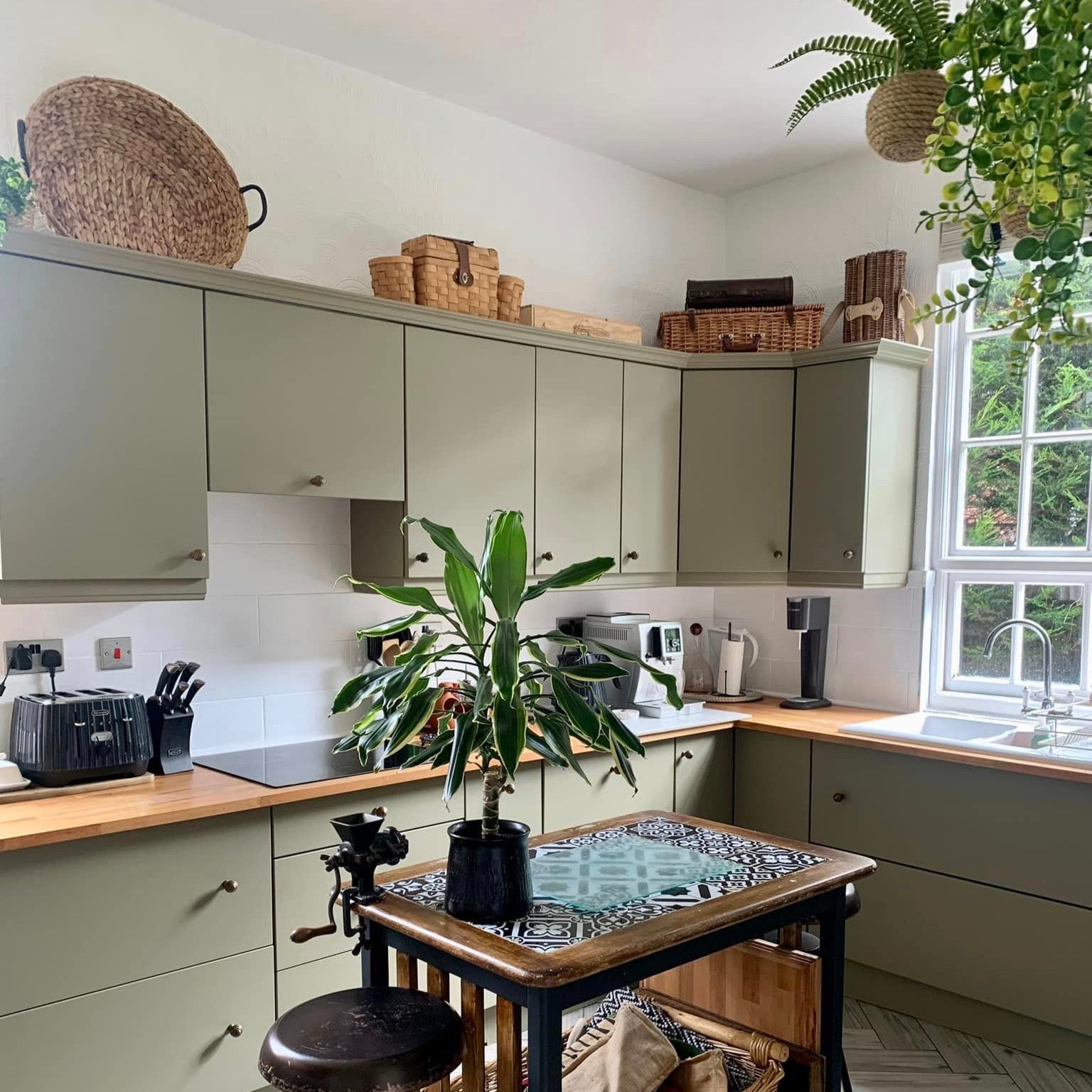
Monochromatic color schemes create a harmonious, calm atmosphere, which is currently very trendy in interior painting. Right now, it’s trendy to paint ceilings and moldings the same or nearly the same shade as the walls.
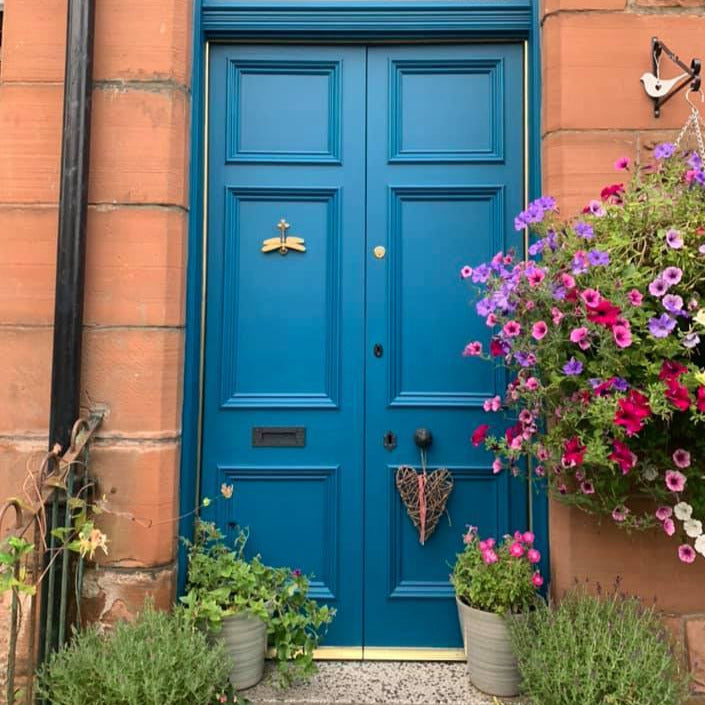
You can choose one main color, say blue, and use different shades of blue on surfaces and in decor, ranging from very light, bright, greenish-blue to navy blue depending on the room and desired atmosphere.
Complementary colors for the bold
A contrasting color scheme uses two colors from opposite sides of the color wheel.
How would orange and blue look together, for example? You can also use this trick on a small scale – for example: paint a wall blue and use an orange lamp in front of the blue wall in your decor.
Bold complementary colors work well, for example, in retro-style interiors. Modern interiors can also handle complementary colors as accents. Complementary colors are very pleasing to the human eye.
Which colors go well together in interior design?
If you follow the color wheel, you’ll find a wide range of shade options to choose from.
Some of these combinations may already be familiar to you, while others you might not have encountered before.
Here are some successful combinations worth considering:
Yellow and green: Hot as Mustard and Constance Moss
Green and natural white: Green With Envy and Parchment
Yellow and orange: Oopsy Daisy and McFee
Blue and red: Hornblower and Rubina
Blue and green: Ol' Blue Eyes and Wise Old Sage
Blue and orange: Ol' Blue Eyes and Earthy
Blue and light pink: Kiss Me Slowly and Dusky Blush
Green and light pink: Steaming Green and Rosy Dusk
Play with shades and the intensity of shades.
A good tip is to use different saturation levels of the color.
We recommend using a lighter shade of one color and a darker shade of the other.
For example: Green and light pink
Use darker green and light pink together – a guaranteed working pair! Raspberry red and fuchsia also work as spices in this combination.
Finish the space with a light blue floor. Do you notice that this foolproof combination looks like it’s straight from nature!
Green is trending in interior design now.
You can naturally combine green with all natural shades: blue, brown, terracotta, beige, and black – as well as their various gradations.
Think of the sky – sea and earth. With these shades, you can create a cozy and natural calm background for the rest of your home decor.
You can be bold with natural shades – try water tones, deep forest green, and fresh sky blue.
Combine green with a soft cream shade instead of white if you want soft tones.
What pairs well with gray?
Gray is still popular in interior design; you can choose pairs for gray from lively terracotta, blues, and various reds.
Spicy shades of browns and yellows also pair well with gray.
Now that you have a bit more information on how to use the double-sided color wheel and how to mix colors, you will surely get inspired to create your own perfect palettes!
You can conveniently access the shades directly from here.
You can get your own color wheel here.
You can read more about how to mix your own unique shades here.